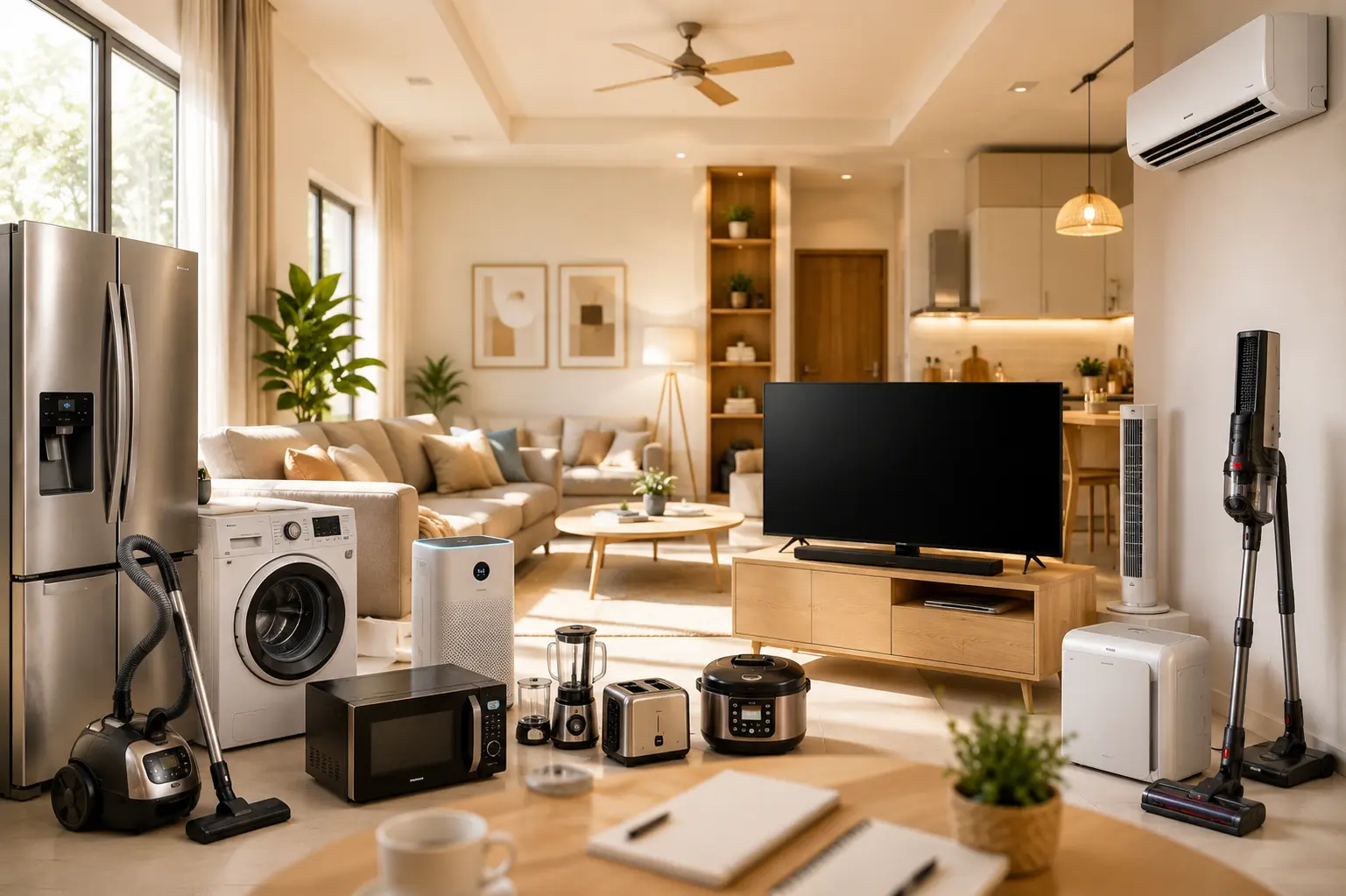
Moving into a new home presents an unanticipated challenge: the empty rooms, the vacant walls, and the lack of functioning appliances. A home electronics checklist comes in handy to avoid frantic shopping trips through various stores on the day of the move. Here is a room-by-room breakdown of what to purchase, why the items are important, and how to avoid overspending in Delhi NCR!
Why a Checklist Beats Impulse Shopping
Shopping by room instead of by store saves money and prevents the need for multiple trips. Purchasing a fridge without prior assessment of where the power socket is located, or a chimney without knowing the size of the stove, can result in an exchange or alteration of wiring later. Planning your purchase room-by-room and determining how much energy each item uses is the key!
Kitchen: The First Room to Wire
- Refrigerator – It should be chosen according to the number of people living in the house, as 200-300L is usually enough for 2-3 people, while families of 4 and more need at least 400L.
- Chimney and stove – Chimney width should match stove size (either 60cm or 90cm). Leaving the chimney too small causes grease accumulation for months.
- Microwave or OTG – A 20-25L microwave capacity will be enough for heating food, while convection microwaves can also be used for baking.
- Water filter – It should be an RO+UV type if you live in Delhi NCR because groundwater TDS in the area is high, but make sure to check the TDS in your area before purchasing the filter.
- Mixer grinder and electric stove – These tools will come in handy during gas delays and in homes without gas connections.
Living Room: Entertainment and Comfort
- TV set – 43-inch screen for spaces under 120 square feet; 55-inch or larger for larger spaces. It’s obligatory to keep the distance to the screen checked (approximately 1.5 times the size of the screen in feet).
- Air conditioner – 1-ton for space less than or equal to 120 square feet, 1.5-ton for space up to 180 square feet; inverter air conditioners are more expensive as an initial investment, but they reduce summer electricity costs in Delhi by 20-30%.
- Soundbar or home theatre – Not necessary, but recommended.
- Wi-Fi router – Should be installed in a place not far from the rooms.
Bedroom Items
- Air conditioning system (split or window unit) – While the installation of window units is cheaper and requires external wall space for units of split type, it is more appropriate for rooms with ultramodern architecture.
- Ceiling fan (BLDC motor) – Consumes only around 28W instead of a normal 75W.
- Water heater/geyser – The best choice is a 15-25L geyser for the bathroom with one sink; instant geysers are needed when only a few people use the bathroom.
Power Back-up Equipment
- Inverter system with a battery – A 1500VA inverter set with a tubular battery can operate fans, lights, and the television for 3-4 hours during a power cut.
- Voltage stabilizer – Protects the air conditioner and refrigerator from voltage fluctuations in NCR.
- UPS for home office – A small UPS is enough for routers’ and laptops’ functioning during short power cuts.
Safety and Smart Additions
- Smoke alarm – Rather cheap equipment, usually neglected but actually important, especially if there is an LPG pipe connection in the house.
- Smart socket and doorbell with camera – Excellent option for making your house look safer and easier for people who are approaching you while you’re away.
- Power strips with surge protection – A good investment; 2-3 more power strips should be purchased since your new house will not have enough sockets.
Where to Buy: Best Electronics Store in Delhi NCR
Delhi NCR offers three practical routes for sourcing this checklist:
1. Top electronic chain stores (Rakesh Retails, Vijay Sales, Reliance Digital) – Common prices, good service once you purchase more expensive items such as an AC or refrigerator.
2. Wholesale markets (Nehru Place, Karol Bagh’s Ghaffar Market, Wazirpur Market) – Good prices on some items; however, warranty service differs from one outlet to another.
3. Local stores – Make faster acquisitions, particularly with items that do not require a market trip.
To save time, it is recommended to purchase expensive items from authorized retailers for proper warranty service and buy cheaper equipment from a trustworthy local store.
A Quick Buying Sequence
1. Verify electrical plans and the number of sockets available.
2. Reserve the essential appliances 2–3 weeks before moving in; installation slots are quite busy during the holiday season.
3. Order a backup power source (inverter, stabilizer, etc.) as early as possible, as it takes a day to install and should be completed well before using appliances.
4. Purchase the necessary smaller items for extension cords, smoke alarms, smart plugs in the days preceding move-in.
Making a shopping list for your move-in? Begin with the expensive appliances, purchase a warranty with an authorized seller, and finally fill out the rest of your list with a reliable local electronics store.